Energy & Resources/Force / 03
More power is being built.
Less is reaching people.
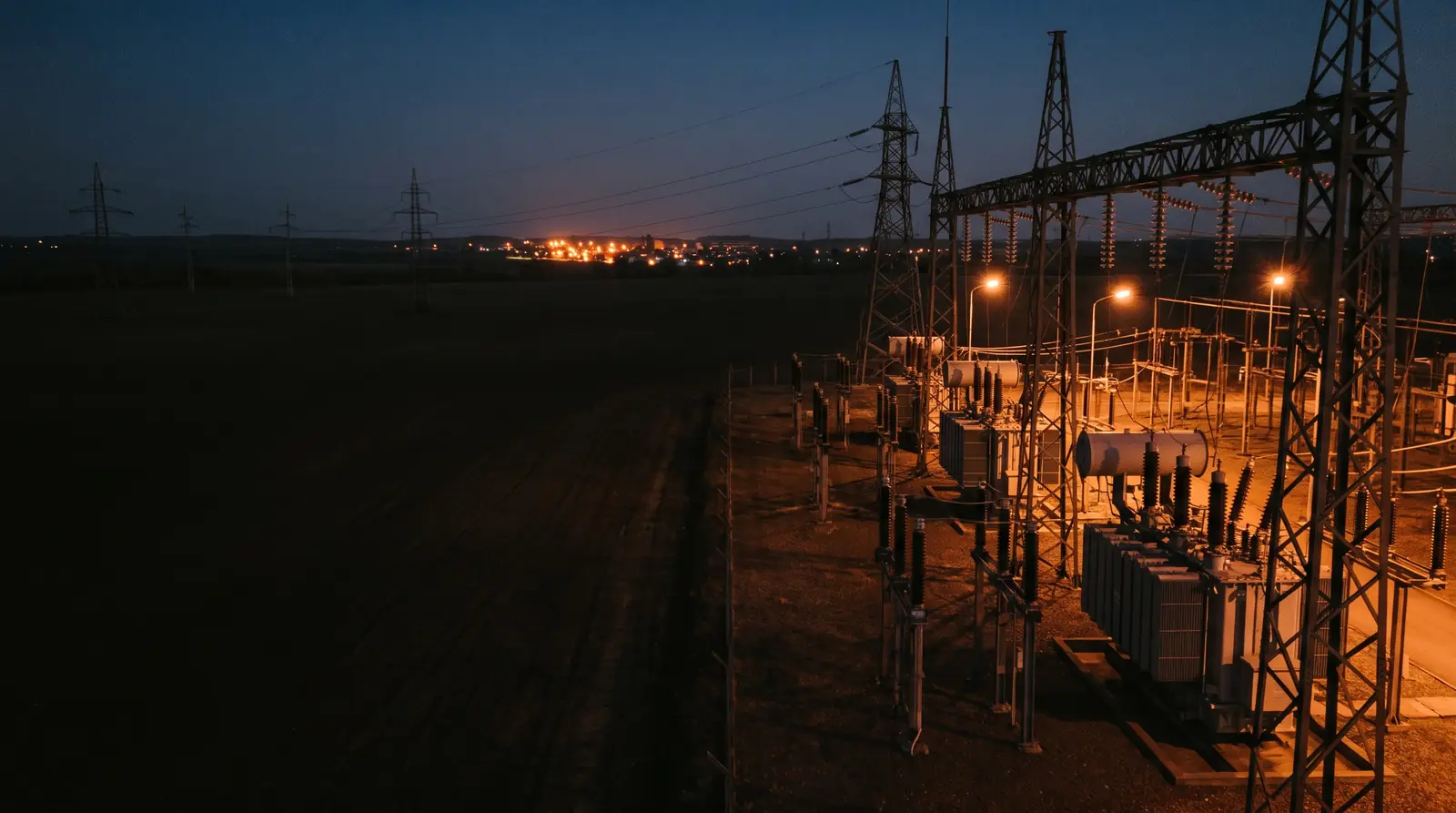
Generation is rising while consumption per person falls. Both facts are true at once.
The state of it/01
Two numbers
that disagree.
Africa added 11.3 gigawatts of renewable capacity in 2025, a 15.9 percent rise. That is real building, and it is accelerating.
At the same time, electricity use in Sub-Saharan Africa fell to 377 kilowatt hours per person, down from 392 in 2021. And 44.9 percent of the population still has no electricity access at all.
Both are true. Capacity is being added faster than population growth in some places and slower in others, and much of what is added never reaches a paying customer.
Renewables already supply about 70 percent of final energy consumption in the region, but most of that is firewood and charcoal for cooking, not electricity. The word covers two very different things.
What decides it/02
What decides
whether the lights stay on.
Building a power station is a solved engineering problem with willing financiers. Getting the electricity to a customer who pays for it is neither.
Where the utility cannot collect, cannot meter, and cannot pay the generator, no amount of new capacity helps. The plant runs below capacity or does not run at all.
Solar is cheap where the sun is strongest, which is usually far from where the load is. Without a line to move it, cheap generation is stranded generation.
Transmission attracts far less capital than generation because it is dull and its revenue is regulated. That imbalance is now the main physical limit on African power.
A power purchase agreement is the project. Its counterparty, its tenor, its currency and its termination clauses determine whether the plant is financeable at all.
Where the only buyer is a loss-making state utility, the deal needs a guarantee behind it, and the guarantee has its own price.
Africa holds a large share of the minerals the energy transition needs. Extracting them creates royalties and jobs at the pit. Refining them creates an industry.
The gap between the two is power, water and skilled labour, in that order. Countries that solve power first get the second industry. Countries that do not export rock.
What it means/03
The gap is
the market.
Every kilowatt hour that does not reach a customer is demand already waiting. Capacity is being added faster here than almost anywhere. The wires and the meters are the part still to build.
The Brief/
The NextStep Africa
Brief.
What the engine turns up, every fortnight. From Lagos.
- What moved
- The change that mattered, and the number under it.
- How it connects
- The systems involved, and what one does to another.
- What it turns on
- What has to go right, and who is already building it.
- What to watch
- One indicator, and when it resolves.
SubscribeNO. 14 / T-09 DAYS
FREE. EVERY SECOND TUESDAY. READ BY DECISION-MAKERS ON THREE CONTINENTS. ONE CLICK TO LEAVE.
From the founder's desk.
NextStep Africa / Lagos